Boer War

Quick update – Mary Ann Foster

So far it seems Mary Ann Foster has managed to cross continents unrecorded.

Thanks to some help from Rootschat, I’ve found that at the time of her father’s death in 1898 Mary was living in Cheltenham, a suburb of Melbourne, Victoria. I still believe she was a nurse, but have also discovered she wasn’t trained at the Royal Melbourne Hospital and can still not find her on any list of Australian nurses bound for the Cape.

The next time we know her whereabouts is August 1902 when, presumably because of her impending nuptials, she asked for and received confirmation of her birth record from the Victorian State Statist, Richard Treacey. This shows that she was in South Africa shortly after the conclusion of the Anglo Boer War and, it can be surmised, she hadn’t just arrived if she had got engaged that summer.

So, sometime between 1898 and summer 1902 she crossed the Indian Ocean. There’s a searchable index of passengers leaving Victoria to foreign climes and as far as I can see, she’s not on it. There is a Miss Foster bound for Fremantle and it is possible that she travelled there first (her sister Matilda was married and living in Perth) which is great, but passenger lists for those leaving Western Australia are not so easily found. Update: I found the arrival manifest which has been digitised on the WA archives site, and while the Victoria archive suggests a Miss M Foster left Melbourne on the Wollowra, she’s not listed when it gets to Fremantle. So frustrating.

Noticing things

It’s funny what you notice when you’re not really looking.

I’ve been both a bit disheartened after Kew and busy with other things, so haven’t been actively looking for anything in the family history for weeks. However, some time ago I made a list of things I should be doing in this field, one of which was to track down the nursing credentials of Mary Ann Foster. I had another cursory look today and there’s still nothing showing on any of the records of Australian nurses at the Boer War. A bit disappointing but not unexpected.

Anyway, I started to look at it from another angle given that there were a number of nurses who travelled to South Africa from Australia but were not part of any official party. Passenger lists are an obvious option and I was about to start searching for them but then I got distracted. Just going over things known, I was reading the reports of her father’s demise when it struck me that she wasn’t there – the reports only mention her younger sister Margaret and later the husband of her older sibling, Sarah, as pall-bearer. Mary Ann would have been 26 by this time and although still single could, in theory, be anywhere in the world, so the chances that she would show up on any official Australian list of nurses becomes more slight not better. Just the sort of puzzle one needs to kick-start the research juices.

The game is afoot!

Cape Police

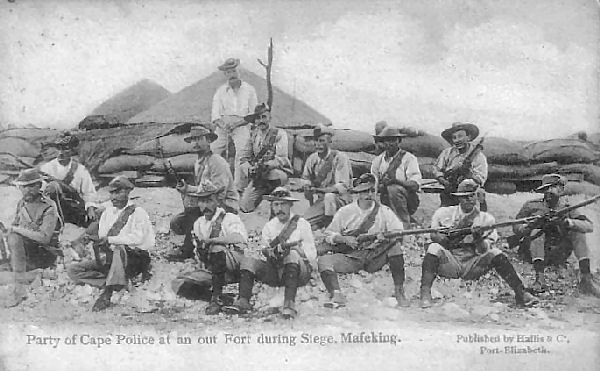
At the start of the war there were some 750 members of the Cape Police. According to angloboerwar.com, a force so ubiquitous, and its services throughout the whole war so varied, that to give a connected account of its work is impossible. This is the unit that Philip Joseph Robinson joined in September 1900 and so must be* among the 14 men pictured in this old photograph of a Cape Police unit at Mafeking.

unit of soldiers

It shows their uniform though and the almost compulsory moustache wearing.

*won’t be

A little more light

Philip Joseph Robinson it seems did not serve with the Imperial Light Horse, despite saying that he had when completing his Kimberley Horse attestation papers in May 1902. This entry from the nominal rolls has the telling addition of “no trace” above the initials ILH (left hand side).

27c2432ccb7f01b6f31a9df6b7c649f6

But it does at least add to the sum of knowledge so far.

New light shed

Finally, a new source for Philip Joseph Robinson that answers more questions than it poses!
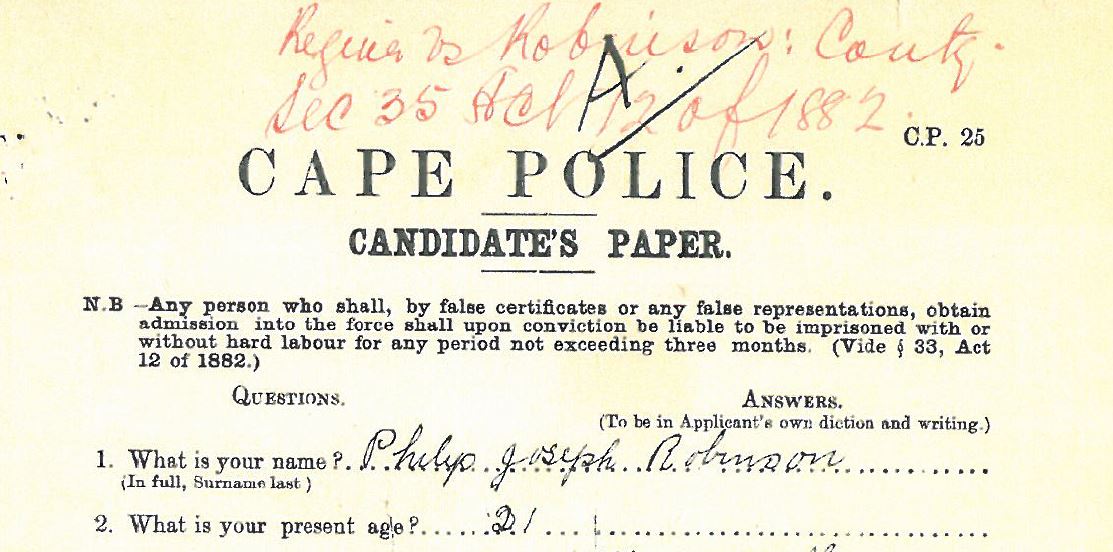
I’ve just been sent the candidate papers for when he signed up to the Cape Police.
PJR-CPI’ve updated his page incorporating the new information, which does throw a deal of new light on his early years at least. He was a butcher but had been working on the railways in the north before the war, could read and write both Dutch and English, and had no indication of venereal disease!

It’s such a good feeling when your new information actually improves your understanding.

A Slippery Fish

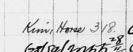
The earlier teaser post included this image taken from the medal rolls of the Kimberley Horse.

Intriguing

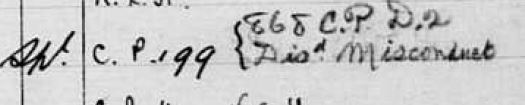
Note the numbers 868 and 199, the apparent numbers assigned to PJ Robinson while serving in the Cape Police.

The full entry shows how any medal supposedly earned for his service in the Anglo-Boer War was not issued (note the crossed out entry):

Exhibita

(and what does “H.O.” mean?)

The initials “P.J.” could be Patrick John for instance, so how do we know that this refers to Philip Joseph Robinson?

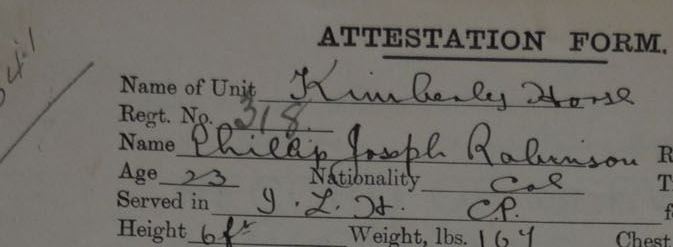
Take a look at this close-up of Philip’s attestation paper for the Kimberley Horse;

Exhibit1

The important details are; his name (obviously), his regimental number (318, matching the record above) and that he previously served in I.L.H and C.P. vis the Imperial Light Horse and Cape Police.

So far, so good.

I couldn’t find any mention of him in the ILH rolls but did find mention of PJ Robinson in the Cape Police medal rolls (Anglo-Boer War): Here is the name:

exhibit3Again, the number 199 matches that on the Kimberley Horse record, and at the other end of that line is this:
exhibit2
So the two match. 199 Sergeant PJ Robinson of the Cape Police was also 318 Corporal PJ Robinson of the Kimberley Horse.

So who’s this?
exhibit4

And what did he do?
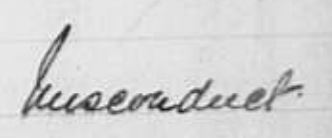
exhibit5
This is the only other PJ Robinson I have so far found in the Cape Police rolls; Peter Joseph Robinson, but matching number 868 and also discharged for misconduct. Typo? Perhaps a mix up of two different people’s records? Could it even be that the misconduct was giving a false name? At this stage, who knows?

But we do know Philip was prone to a name change…

Phillip Joseph here, Philip Joseph Hercules on his marriage certificate, just Joseph on his wife’s estate papers, no wonder he’s proving difficult to pin down!

Interesting aside

It’s now almost certain that my dad’s grandfather and my mum’s grandfather were both involved in the Relief of Ladysmith during the Boer War. It’s also true that mum’s same grandfather and dad’s other grandfather were both involved in South Africa’s WW1 campaign in what is now Namibia.

We know they never met in a family setting, perhaps they did in wartime.