Author: RR

Interesting aside

It’s now almost certain that my dad’s grandfather and my mum’s grandfather were both involved in the Relief of Ladysmith during the Boer War. It’s also true that mum’s same grandfather and dad’s other grandfather were both involved in South Africa’s WW1 campaign in what is now Namibia.

We know they never met in a family setting, perhaps they did in wartime.

Footsteps

Leith portraitI moved to Portsmouth in 1981 and was pretty sure that I was the first member of the family to live in the city, which when I started the family history lark ultimately rendered the city’s record office as ‘not much use’ in the grand scheme of things. However, I now discover that my great grandfather was posted here in the 1890s – possibly for as long as six years. Having joined up in 1890 in Belfast, the 1891 census shows the 1st battalion of the Royal Inniskilling Fusiliers resident at the Victoria Barracks, Portsea and regimental records show that he may well have lived in Portsmouth until he was posted to India in 1896.

What remains of the Victoria Barracks now houses the city museum, which until recently included the records office. Irony?

Uncle Stan

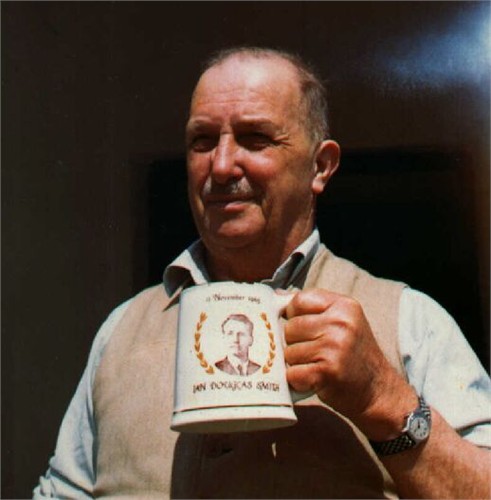
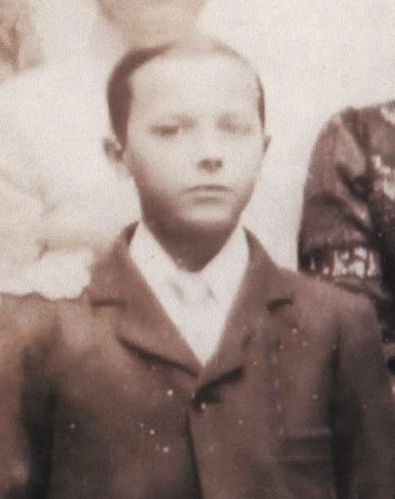
stanWhen I was a child we spent several summer holidays at my uncle Stan’s farm at Farlecombe on the edge of Dartmoor. It was an idyllic time, even the boredom of the stupidly long journey down there would evaporate as we turned into Devon’s narrow lanes – although this may have been due to the adrenalin rush as the possibility of tractor-based calamity increased.

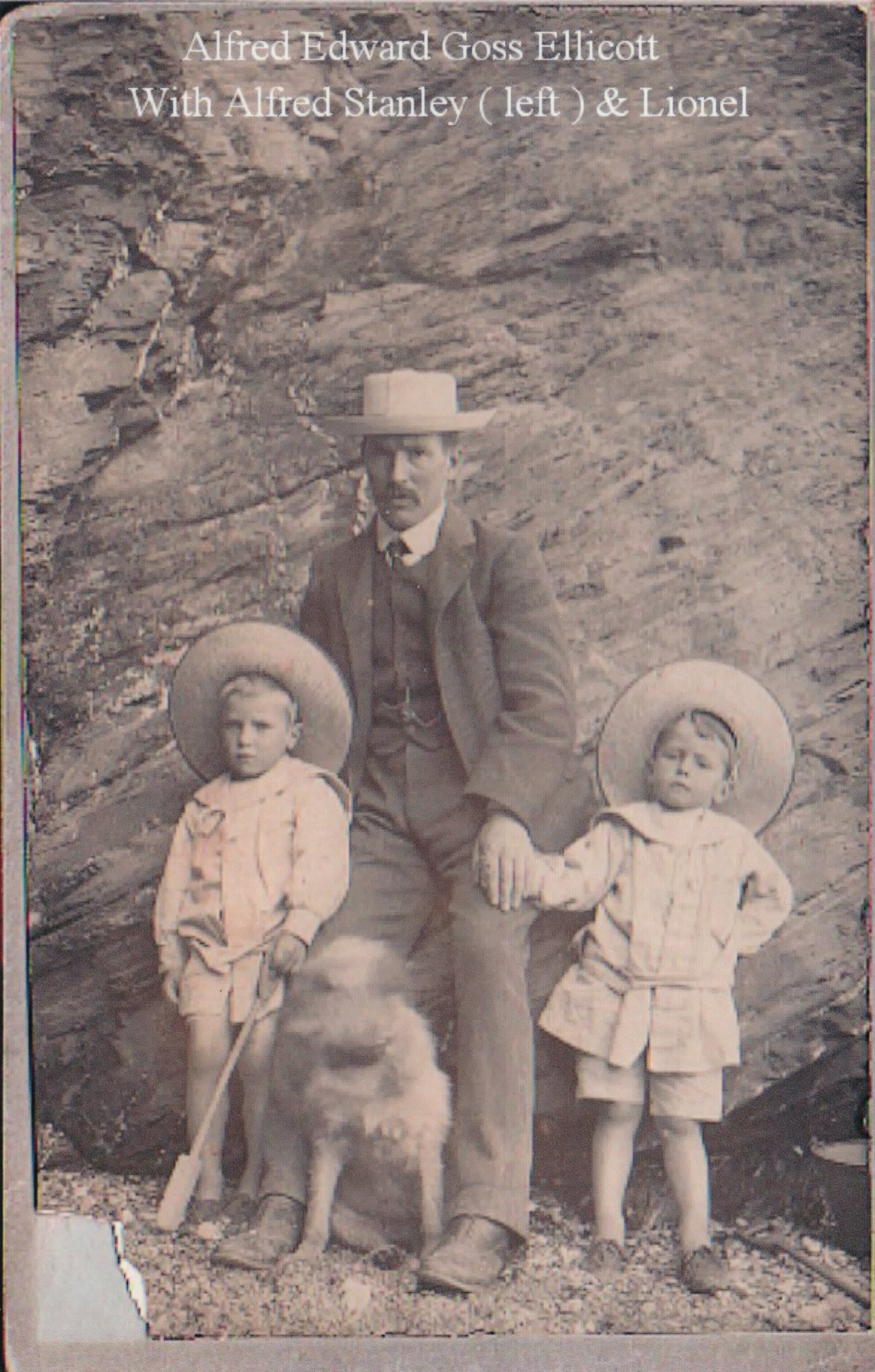
Uncle Stan (actually my great uncle; Alfred Stanley Ellicott) was, to me, the archetypal farmer with his heavy corduroy trousers and wellington boots, he seemed completely at one with his surroundings as his thick Devon burr coaxed his cattle down the lanes through this beautiful landscape. He could have been there forever.

stan 2

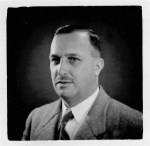
Many years later I’m busy tracing my grandfather’s globe-trotting for Cable and Wireless and I start to notice another Ellicott appearing in the passenger list searches and it transpires that his brother, far from being a lifelong son of the soil, spent many years as a civil engineer in Sierra Leone, something no doubt other members of the family already knew but, at the time, was quite a surprise to me!

I suppose the moral of this post is never to assume you already know a person’s story: ask (about) your relatives, and even if you never find someone famous in your tree, there are always interesting tales to tell.

Who Do You Think You Are?

I suppose that at some point it behoves the family history blogger to pass comment on the BBC series “Who Do You Think You Are?”. Don’t get me wrong, I find it very entertaining (even the American version); we all enjoy rooting around in the past, most of the subjects have a good story to tell, and there’s always the chance to see a famous person cry. But I wish it would do more.

Telling our ancestor’s stories is most of why we do this (it’s obviously the reason behind this blog), and every now and then we hit a block or notice a gap in the data, and it is for these occasions I believe WDYTYA could be a little more helpful sometimes. It seems like an opportunity missed in that by the end of the current UK series there will have been 100 shows and yet very few of them have offered much practical help to the amateur genealogist. Even if a particular programme or subject has sparked an idea or two, I’m sure I’m not alone in thinking “how did they get that?” when a subject is handed an obscure record to read, falteringly, on camera – ears pricked hoping to hear how one might access this hitherto unheard of archive, but the moment passes and we’re off on the next leg of our stage-managed journey without so much as a subtitle to help us. (I also wonder whether the professionals they use are sometimes ill-served. They hand over research that may have taken days and hours often without so much as a hint that they trawled through several dusty volumes before they eventually found this small clue but that’s by the by).

Of course, genealogy is big business and the BBC and the WDYTYA production company can point to the website and magazine, shrug and say ‘what more do you want?’ but seriously, we have the Red Button and iPlayer; could we not have WDYTYA Extra with content related to each episode? After all, the first series had a short segment at the end of each programme where Adrian Chiles and researcher Nick Barratt offered basic tips – there’s no reason this could not be re-adopted and expanded for WDYTYA Extra. It could work much like the supplementary content we sometimes see on nature programmes (“how we got that shot of copulating snow leopards” or “what it was like camped out on an arctic ice floe filming polar bears”) so the rest of the audience can go on enjoying Brian Blessed’s workhouse ancestors while we can get help finding our own. Everyone is happy.

What do you think?

Another line, another tangle

While I wait for more details about AEG Ellicott so I can complete that set of stories (see earlier post), I thought I’d take a preliminary look at the Currie family – Elsie Edna Currie was my paternal grandmother – and surprise, surprise, there was another little mess-up within the data; conflicting Scottish census links. Not too disastrous this time, it just means I don’t know as much about my 4 times great grandfather as I thought.

It just shows how useful this process can be in sorting out your facts and sources!

Private John Burgoyne Ellicott

jackLate in 1889 William John Ellicott, fourth child and eldest son of William Ellicott, married Sarah Ann Burgoyne, from Ashprington in South Devon. They had three children: Dorothy Annie (1890 – 1978), Bertie William (1892 – 1973) and John Burgoyne, known as Jack, born in January 1894.  By 1911, according to the census, Jack was living and working on a farm at Ashprington “learning farming”.

Bertie was living in Wanstead when he was signed up to the London Regiment on 8 April 1916. He survived the war and returned to take over the family farm. Whether Jack volunteered or was called up when conscription was introduced in January 1916 is not known, but at some time he was drafted into the 8th (Service) Battalion of the Devonshire Regiment, a battalion formed 15 days after the outbreak of war in 1914 as part of the New Kitchener Army. 

The 8th Devons were part of 20th Division of General Gough’s Fifth Army and was sent to France in July 1915 where they were to be employed in The Battle of Loos. In 1916 They were in action during the Battles of the Somme, including the capture of Mametz, The Battle of Bazentin, the attacks on High Wood, The Battle of Delville Wood, The Battle of Guillemont and the Operations on the Ancre. How much of this involved Jack we don’t yet know.
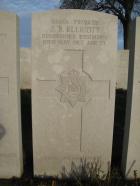
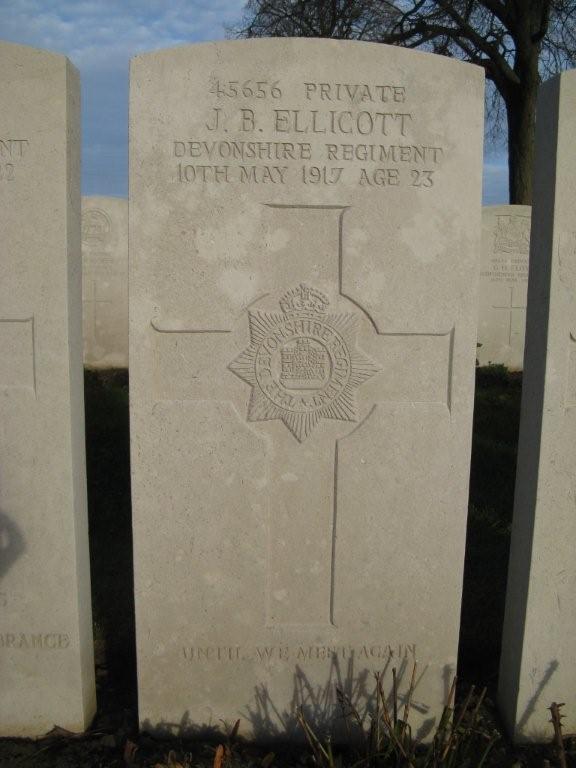
graveThe battalion was then deployed in a flanking operation, the Battle of Bullecourt, in the Arras Offensive of April – June 1917. During the second Battle of Bullecourt, which lasted for two weeks between 3 – 17 May, Jack Ellicott was fatally wounded. He was transferred from the first aid station to the clearing station at Achiet-le-Grand, where he died on 10 May 1917 aged 23. He is buried in at Achiet-le-Grand Communal Cemetery Extension between two other men of the Devonshire Regiment. 

Jack is commemorated on the Morchard Bishop War Memorial in Devon even though his medal card gives the address for his parents as Cobley Farm, Lapford, so why Morchard Bishop and not Lapford, which has its own memorial, is a bit of a mystery.

Jack is my first cousin, twice removed.
James Robinson – further news

Twenty years on from his aborted emigration and the death of his wife Charlotte, the 1841 census shows James farming in Minster at Little Harps Farm with his second wife Ann (née Coveney – James had married Ann on 16 July 1821 at Minster in Sheppey) and their now five children; Adelaide, Ann, James, Sarah and Robert. Life seems to be progressing as one might expect.

The 1851 census makes interesting reading however. James (now 64) and Ann are by this time living at 4 Wandsworth Row, Lambeth with their daughter, Adelaide and her husband Henry Havill (listed as Head of household) and one-year-old child, his parents, his sister, his widowed sister and her child.
James’ occupation is still listed as ‘farmer’ while his son-in-law Henry is a butcher, carrying on the family trade. Quite what James is farming in Lambeth is unclear! Of course, they could all just have been visiting Henry and Adelaide when the census was taken (the 1851 census was taken on 30 March).

The Havills however are back in Minster by 1861 though, where Henry is a butcher on North Street, but it looks like James has by now died – the most likely dates are either 1852 or 1859 if his death is assumed to have taken place in Sheppey.