Updated information

Ancestor hunting in Devon

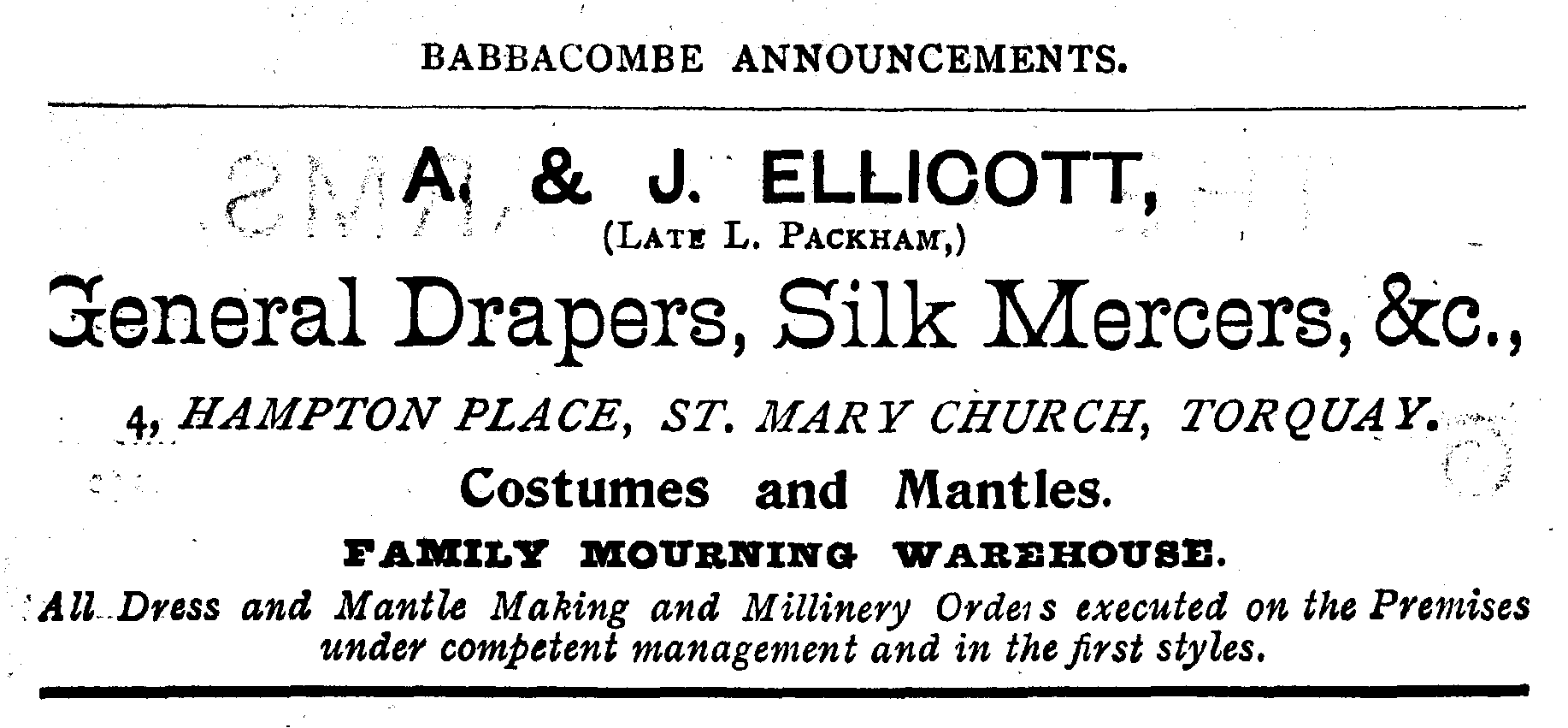
Going to Devon to hunt ancestors was an expedition long needed. I had two principal aims; to dig further back in time and discover the earliest generations of Ellicotts that I could, and to discover what happened to A& J Ellicott’s drapers shop in Torquay. We planned an itinerary that would allow a day at the Devon Heritage Centre and a few days exploring the area, including a visit to Farlecombe and Sampford Courtenay.

So, day one:
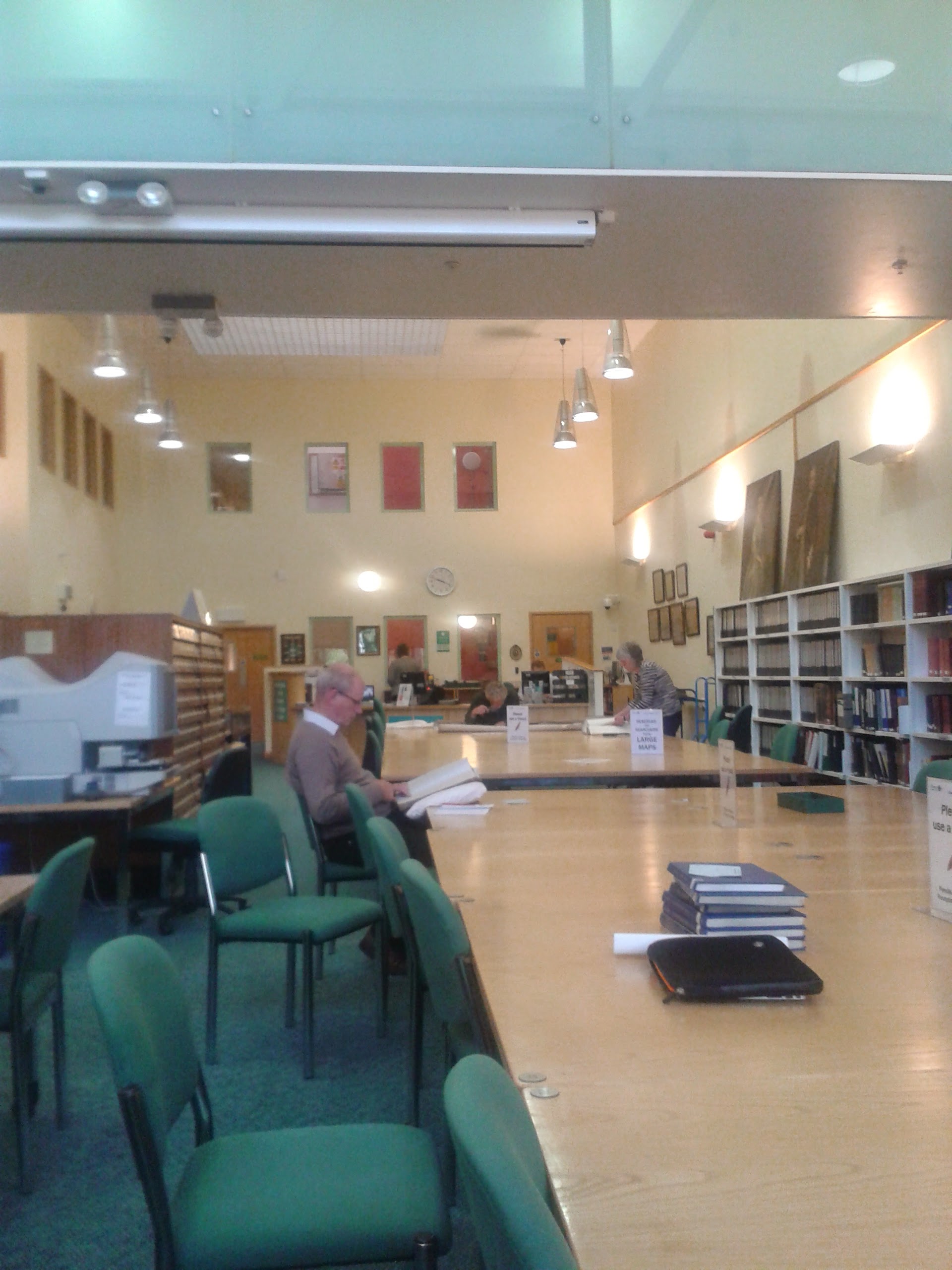
heritage centreThe heritage centre had plenty of parish records to trawl both in transcript and on microfiche, and I was fairly successful; adding three generations to what I knew and can now look back to the 1660s and a certain James Ellacott in Zeal Monachorum.
There weren’t, however, as many trade directories or business records available as I’d hoped and I was only able to narrow down the timeframe in which to look further. Interestingly, A&J Ellicott became, in about 1925, Ellicott & Son. – interesting because by this time Alfred’s sons were largely elsewhere. Edgar was in the Seychelles, Stan was engineering and heading for Sierra Leone, which leaves William. William got married in Gloucestershire in 1929 and soon after moved to Woolwich, so if he is the “& son” his removal would go some way to explain the business’s disappearance from the 1929 edition. I fear/suspect a trip to Torquay may be required!
All of which leaves a few loose ends but at least I feel that I’ve made good progress and I’ve still got a good amount of fragmentary data to go through.
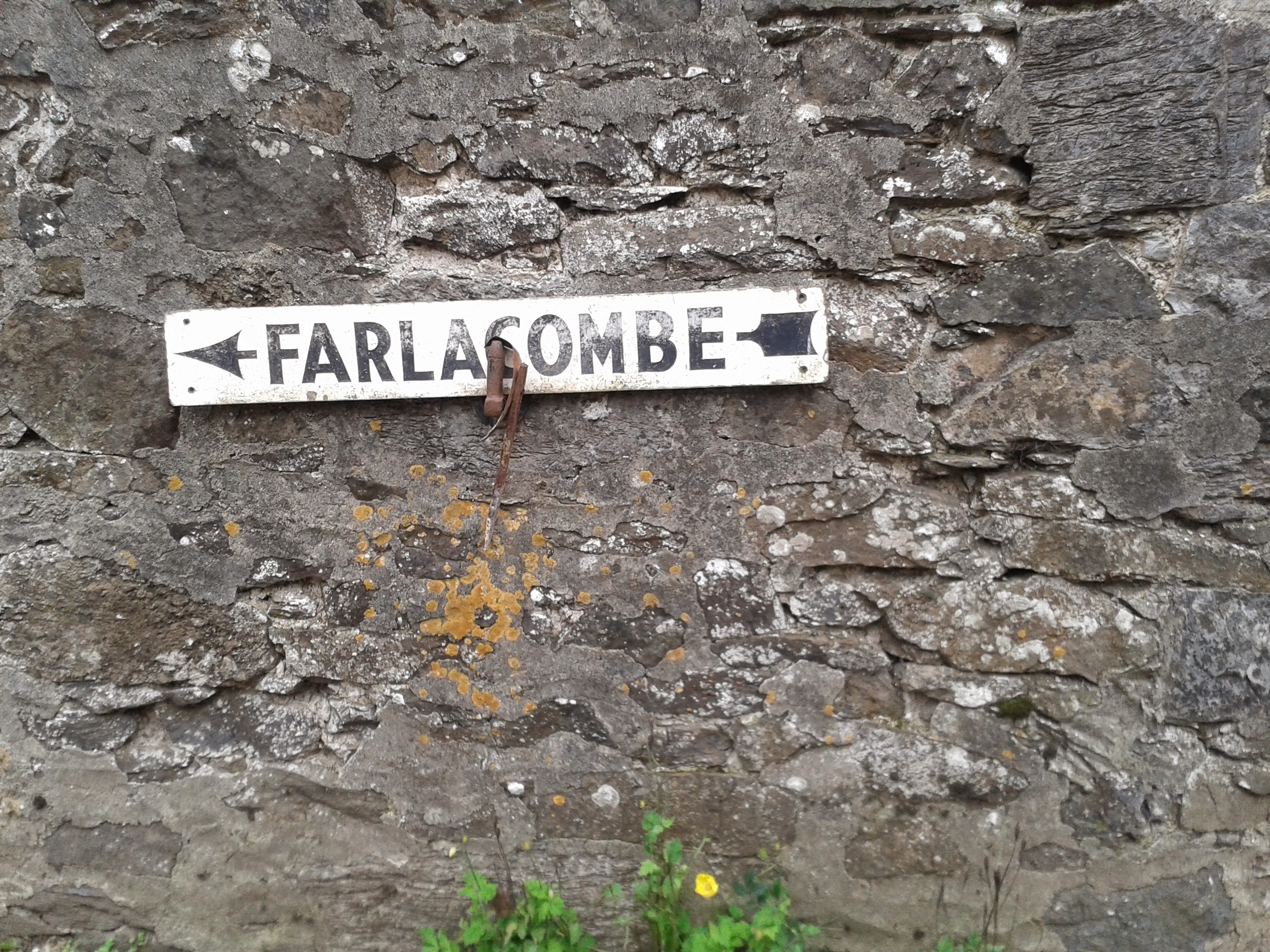
signThe next day we went to Newton Abbott market and then tracked down Farlecombe, Uncle Stan’s old farm. The narrow tracks became more recognisable and as we drew up to the farmhouse it was immediately familiar. Thankfully the current occupant was in the yard with her horse and she remembered “Old Mr Ellicott” so we were able to have a quick look round, which was most enjoyable.

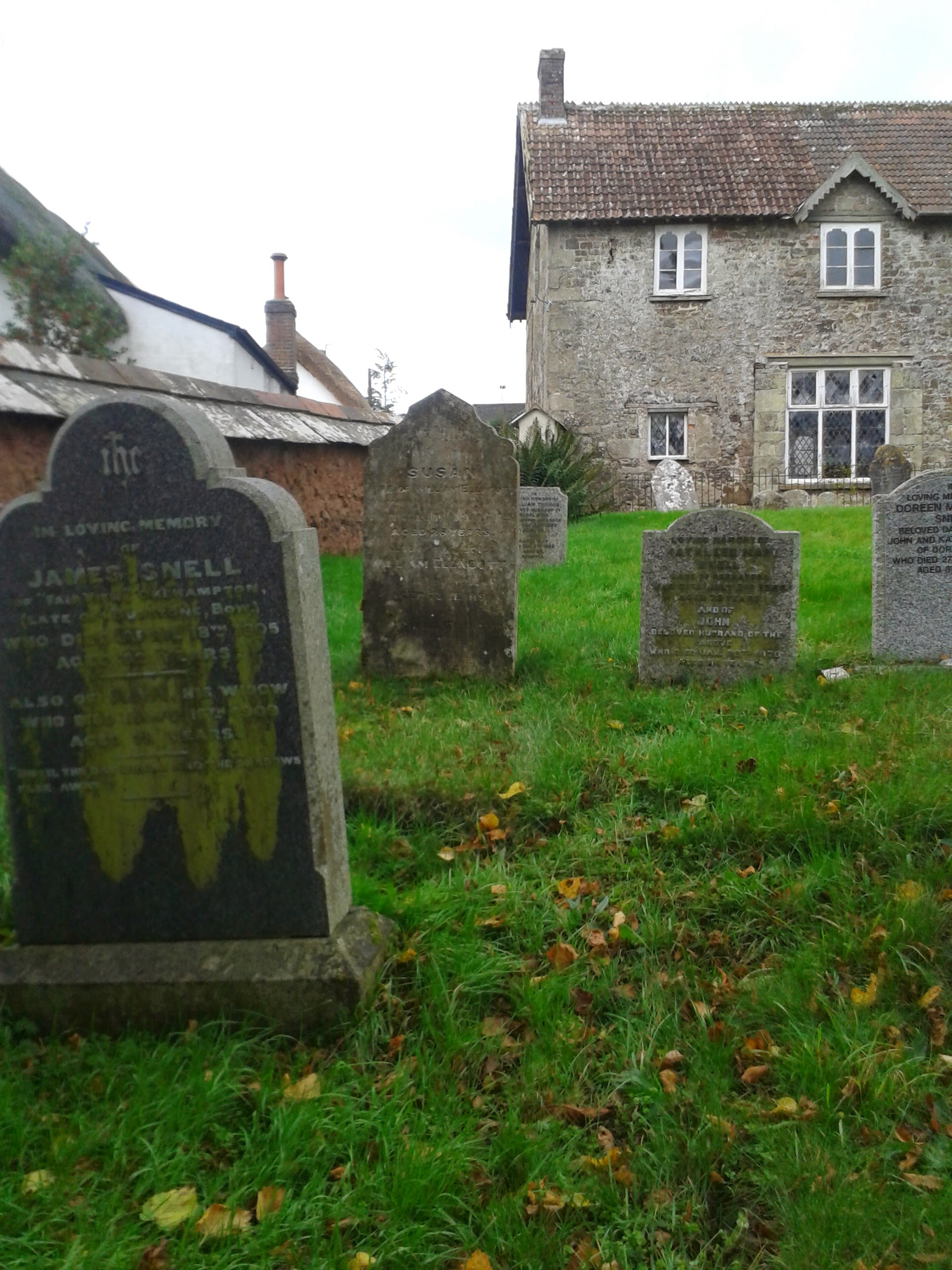
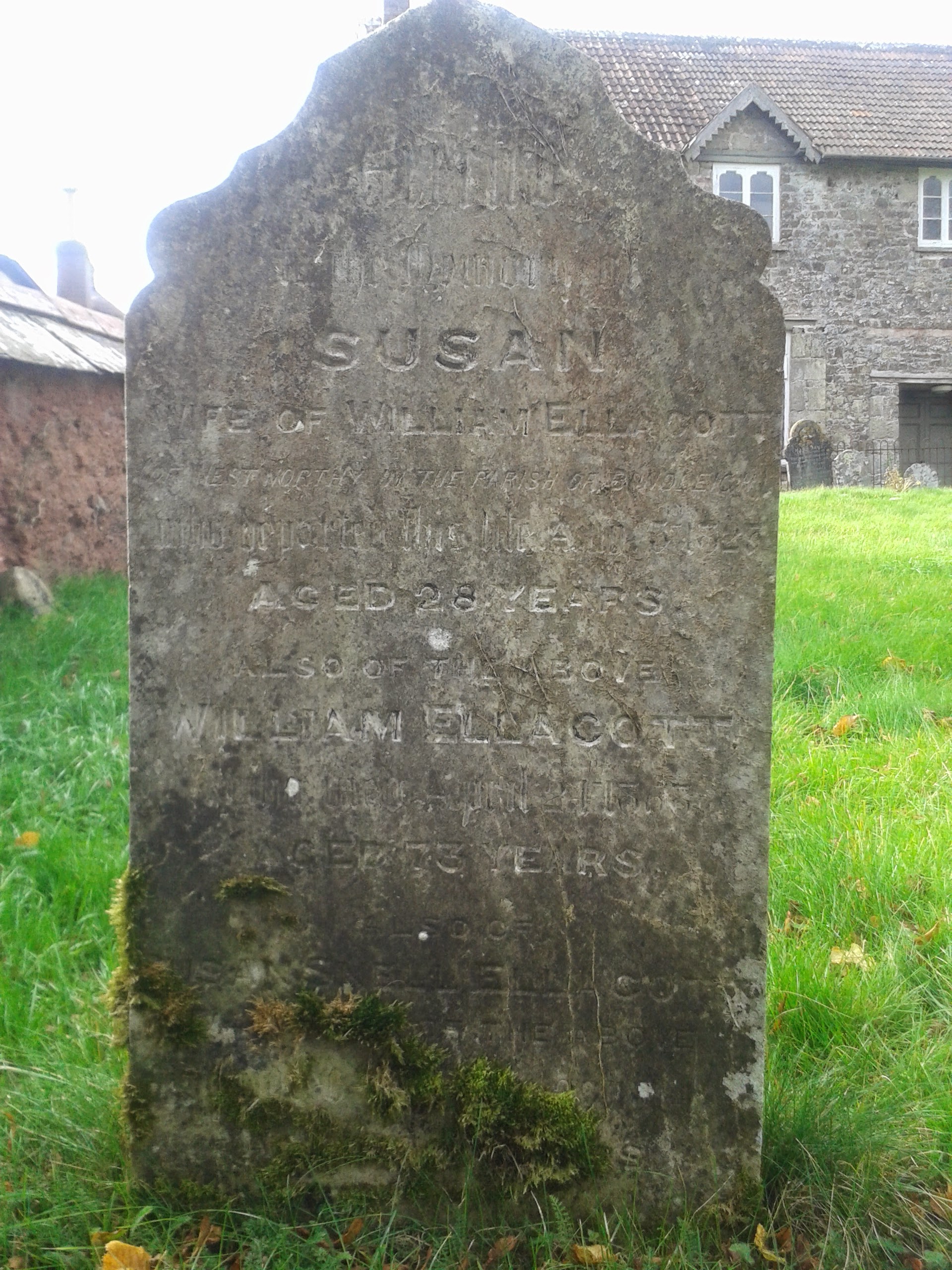
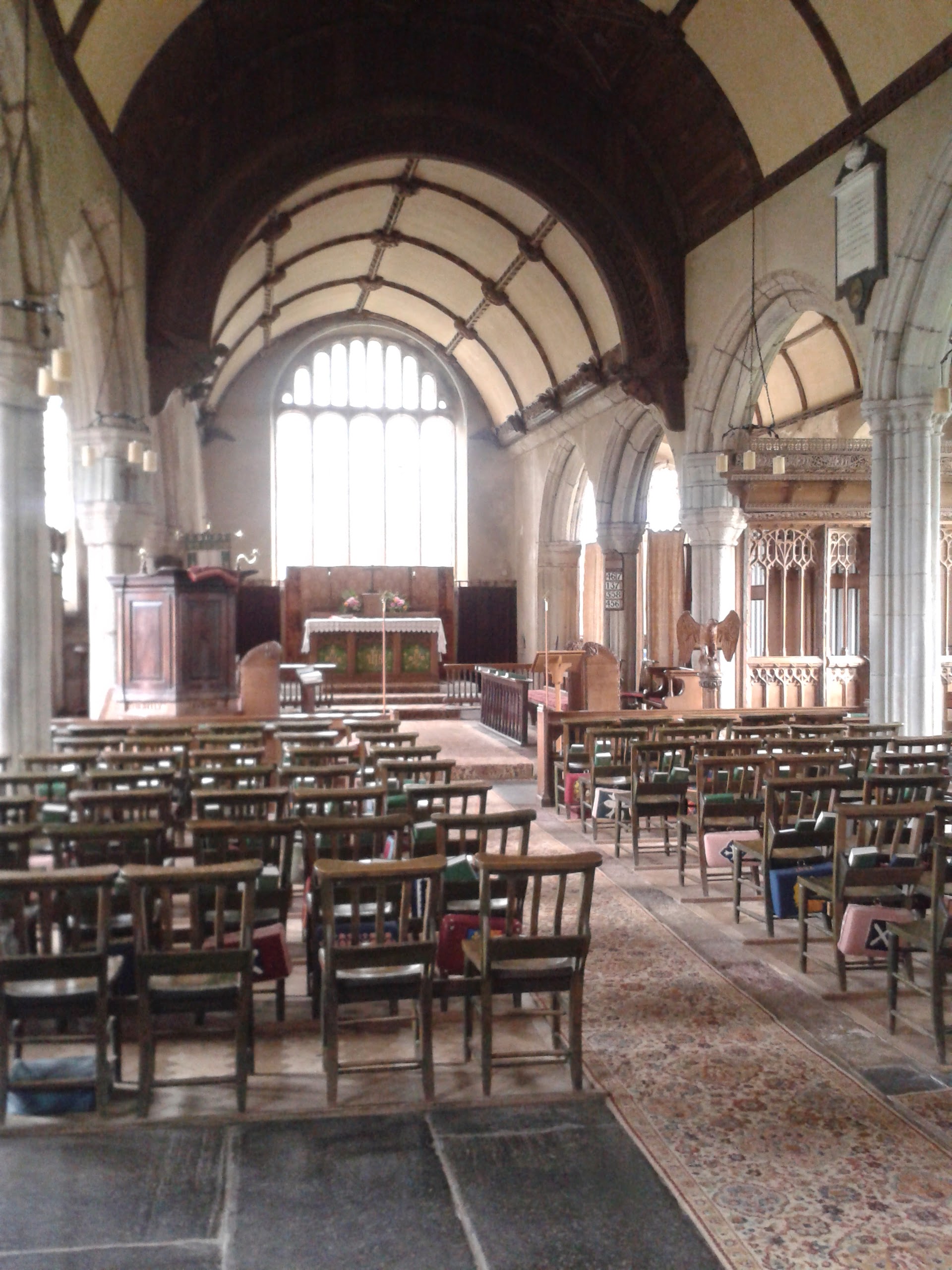
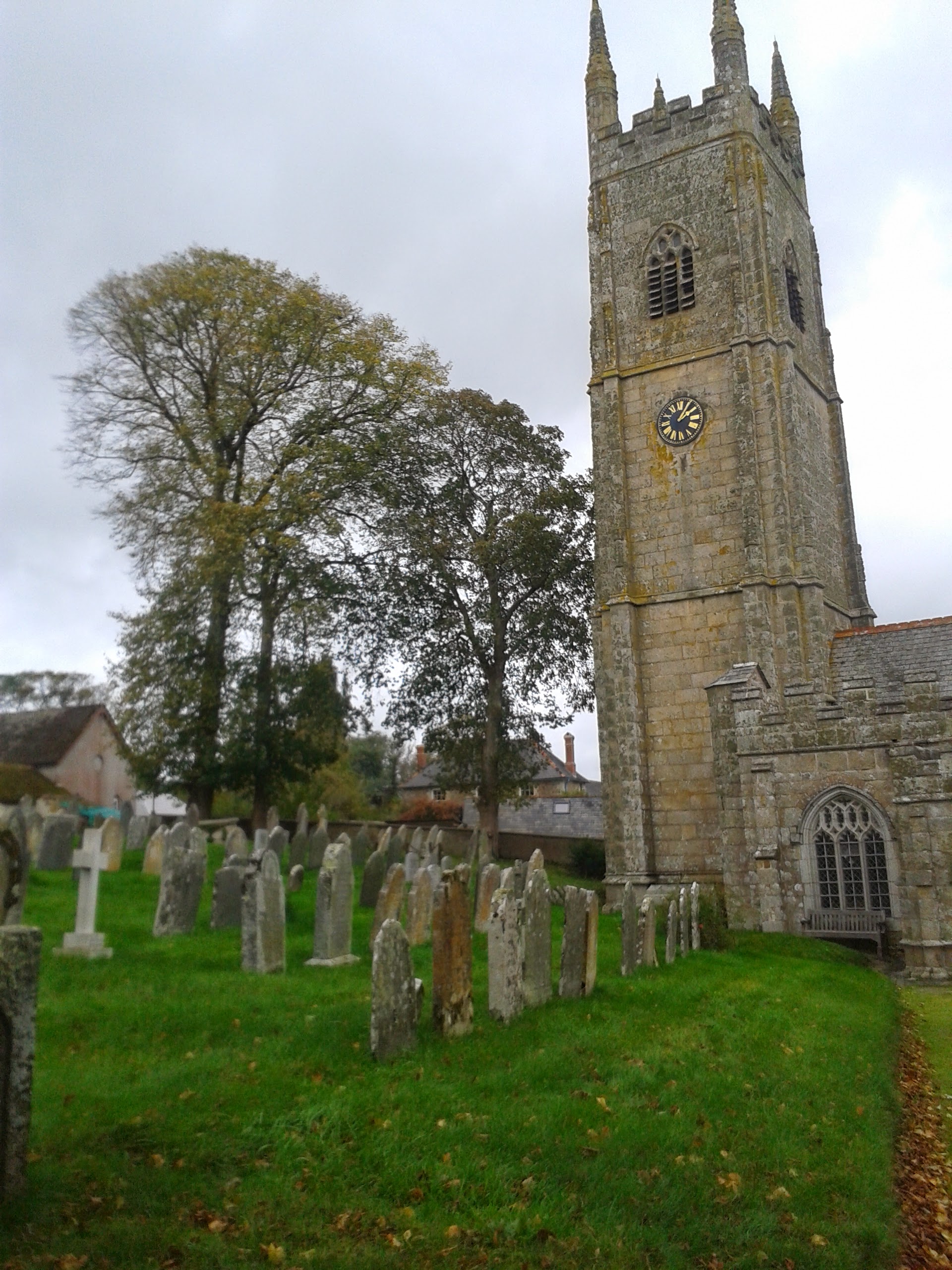
On the third afternoon we arrived in Sampford Courtenay, the centre of the area the Ellicott/Ellacott family lived before moving to Torquay. It is a charming village with lots of thatch and picturesque cottages. We found St Andrew’s church and started clambering among the gravestones looking for any Ellacotts we could, uncertain if there were any to find. About half way round, success! there was the grave of Susan, William and their daughter Susan Snell Ellacott. The gravestone was crisp and legible and as far as you can jump for joy in a graveyard, I did. We also spent an interesting few minutes in the church itself, which was an education learning about the Prayerbook Rebellion of 1542.
churchgravesgravestoneinterior

After all that excitement, I’m working out which part of the country to visit next – possibly the Medway Towns to look for the original Philip!
Ellicott progress update

After a few hours sifting through the lists of results from Find My Past and sorting them into trees, I’ve managed to link up the Honeychurch, Winkleigh and Ashreigney lists. There’s still a question mark over some of Richard and Joanna’s later children; whether it’s still the same family as there’s 21 years between the oldest and youngest on the list with parents “Richard and Joan[na]” – not impossible, obviously, but questionable. I’ve put some of the info into Ancestry and got plenty of reassuring green leaf hints, so that’s some sort of confirmation that I’m heading in the right direction.

There’s no obvious link yet to the list of Ellacotts in nearby Hatherleigh, which is the next one to tackle, and there’s still a biggish gap in data for the mid 18th Century making the Sampford Courtenay list still a bit detached.

And they really weren’t very imaginative with names either; Richard, Mary, Elizabeth, Thomas, William and James in abundance.

Onward.

Excitement and frustration

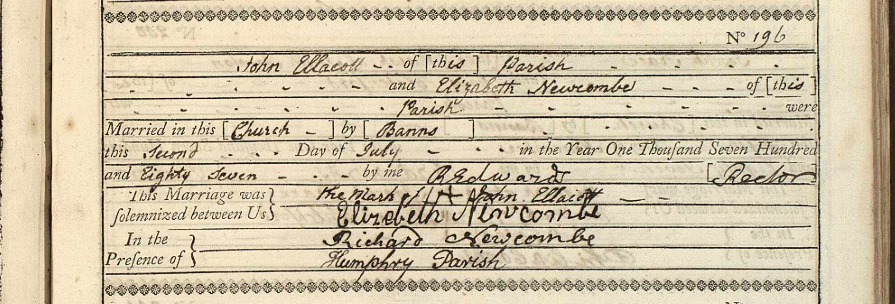
record entryThe beauty of the internet age for the genealogist is that new stuff gets digitised all the time. Find my Past recently (I think it was recently) released a whole tranche of Devon parish records and I thought it would be useful to have a poke around them looking for more Ellicotts. Because there seems to have been a substantial period of time when the family, or the name at least, centred around Sampford Courtenay in North Devon, I ran a search for Ellicott* and Sampford with no time restriction and got about 50 results. It was clear from these results that there were four distinct Ellacot family groups in the area at different times; all very good, except they don’t really connect with each other and there’s a noticeable gap in data between 1700-1780.

So I expanded the search to include the communities around Sampford Courtenay, places like Bondleigh, Ashreighney and North Tawton, and got a further 40 results. Some of these tie in with what is already known plus there seems to be a big Ellacott family in Winkleigh in the 1820s but there is still a lot of work to do. This is when genealogy becomes a jigsaw puzzle; I have lots of data but no clear picture. Now is when the fun begins; matching dates, places and people – wish me luck.

*including Ellacott and Ellacot

Footsteps

Leith portraitI moved to Portsmouth in 1981 and was pretty sure that I was the first member of the family to live in the city, which when I started the family history lark ultimately rendered the city’s record office as ‘not much use’ in the grand scheme of things. However, I now discover that my great grandfather was posted here in the 1890s – possibly for as long as six years. Having joined up in 1890 in Belfast, the 1891 census shows the 1st battalion of the Royal Inniskilling Fusiliers resident at the Victoria Barracks, Portsea and regimental records show that he may well have lived in Portsmouth until he was posted to India in 1896.

What remains of the Victoria Barracks now houses the city museum, which until recently included the records office. Irony?

James Robinson – further news

Twenty years on from his aborted emigration and the death of his wife Charlotte, the 1841 census shows James farming in Minster at Little Harps Farm with his second wife Ann (née Coveney – James had married Ann on 16 July 1821 at Minster in Sheppey) and their now five children; Adelaide, Ann, James, Sarah and Robert. Life seems to be progressing as one might expect.

The 1851 census makes interesting reading however. James (now 64) and Ann are by this time living at 4 Wandsworth Row, Lambeth with their daughter, Adelaide and her husband Henry Havill (listed as Head of household) and one-year-old child, his parents, his sister, his widowed sister and her child.
James’ occupation is still listed as ‘farmer’ while his son-in-law Henry is a butcher, carrying on the family trade. Quite what James is farming in Lambeth is unclear! Of course, they could all just have been visiting Henry and Adelaide when the census was taken (the 1851 census was taken on 30 March).

The Havills however are back in Minster by 1861 though, where Henry is a butcher on North Street, but it looks like James has by now died – the most likely dates are either 1852 or 1859 if his death is assumed to have taken place in Sheppey.

Robinson update – another Adelaide

While I was away for a few days an email has dropped into my inbox. We’ve had a contact from a descendent of James Robinson, brother of Robert and the one who didn’t go to South Africa at the last minute. I had conjectured that the death of their father just prior to the scheduled departure date had prompted James to remain behind. However, there appears to have been an even more compelling reason not to go in that James’ wife, Charlotte (née Leathes) was seriously ill and died in March 1820.
James remarried and had another child, Adelaide, from whom my new contact is descended. More details when I have them.